The best pitches make passing feel riskier.
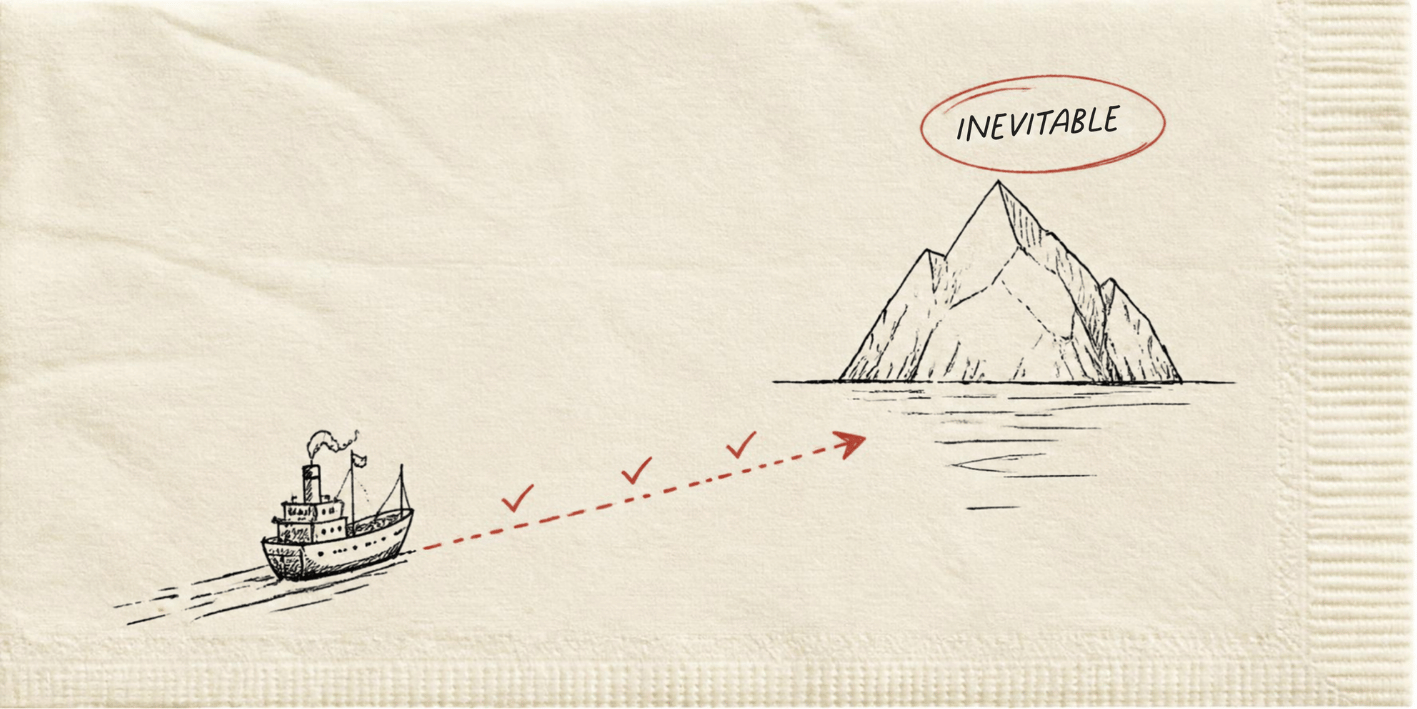
Your pitch might be solid. But does it feel inevitable?
“Iceberg, right ahead!” might be one of the most famous lines in movie history. Which is kind of funny because it surprised no one.
Titanic is a movie about one of the best-known stories in human history. Not only that, it’s a bit of a bummer. There’s no mystery. You go in knowing that boat is going to sink.
And yet it’s still one of the most successful movies of all time.
Because knowing what happens isn't the same as knowing how it happens.
James Cameron made a love story against the backdrop of a disaster whose ending was already written. The outcome was never in question. If anything, its inevitability made everything leading up to it matter more.
Great pitches work the same way. Instead of asking investors to believe something might happen, the best founders make the outcome feel like it’s already in motion. The ship has already left the port, so to speak.
The best pitches usually have four things in common:
- A hook that grabs attention immediately.
- A structure that makes the logic easy to follow.
- Emotion that makes investors care.
- Inevitability that makes the outcome feel unavoidable.
None of these are easy to get right. But the fourth is the one most founders don't even realize they're missing.
Inevitability can be the difference between a pitch that gets a yes and one that gets the polite pass. It means the outcome feels decided before you’ve finished the pitch. The market is moving. The problem is compounding. Customers are buying.
The best pitches don't eliminate the risk. They make passing feel riskier than investing.
Here’s what it looks like in practice.
Before:
“Commercial buildings are facing new emissions regulations.”
OK? And? It might be a fact, but the problem doesn’t feel urgent.
And nothing suggests your company is going ot win. I read it and think “So what?”
Here’s the same headline, rewritten.
“In 18 months, every large building in NYC has to cut emissions or pay fines. We launched six months ago. 200 buildings are already using us.”
Same industry, same problem. But now the market isn't hypothetical. There's a clock on it. And 200 buildings suggest you're already well on your way to capturing it.
You didn’t change the business. You changed the story.
The iceberg was never the story.
The Napkin shares one fundraising or storytelling idea for founders, every week. Carl Fudge is the founder of Presentation Mode, where he's helped founders raise over $1B in venture capital.
Subscribe to The Napkin →