The best raise isn’t always the biggest one
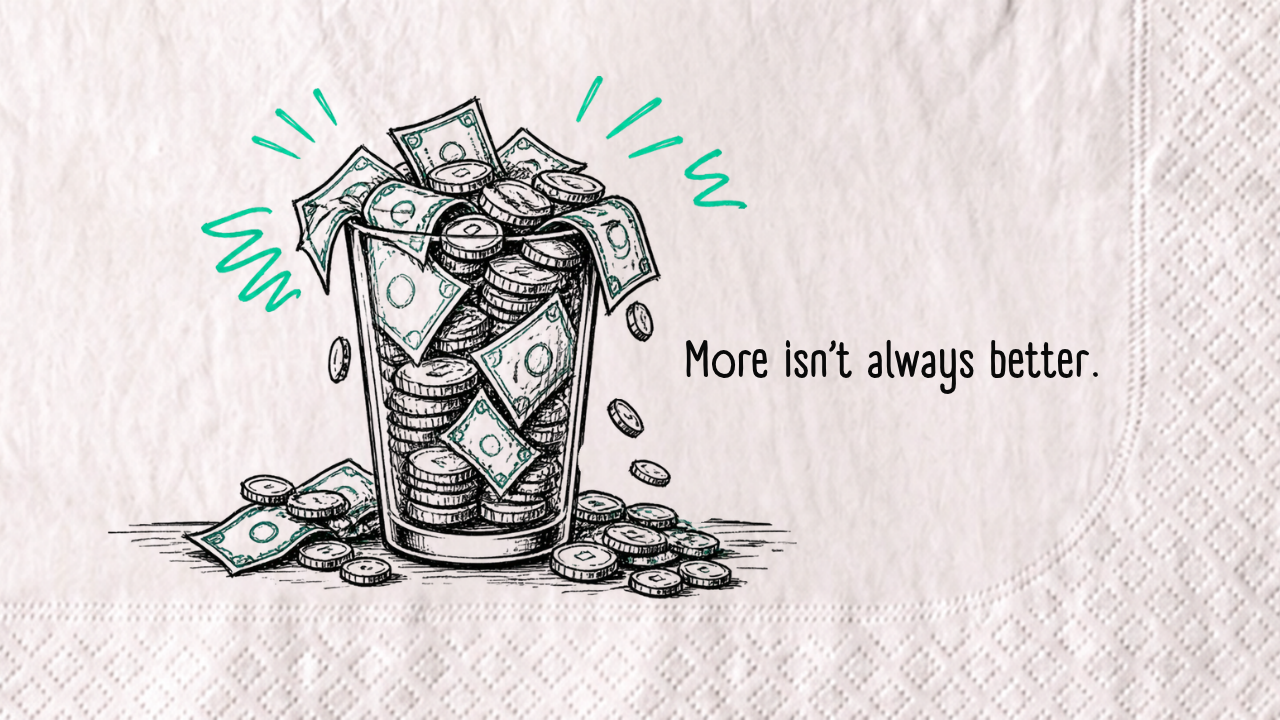
Why a smaller, sharper ask builds more credibility with investors.
Just because a bank approves you for a million dollar mortgage doesn’t mean that’s what you should borrow.
It might get you excited when you scroll Trulia but it’s actually not sensible to buy the biggest house you qualify for.
I know that first hand. Before you know it you’re buried with monthly payments, taxes, upkeep, and maintenance costs.
But enough about my personal finances and back to startups 😅.
I see founders raise too much money all the time.
Next thing they know, pressure and expectations from investors go through the roof. So does their likelihood of a down round next time.
No bueno.
But I get it. Big raise announcements are sexy. You see them all the time on LinkedIn. I tend to roll my eyes. This is what you call a vanity metric if ever I saw one.
Instead of asking what’s the most we can raise, ask this question: “How little do we need to hit this next milestone?”
The bigger the house, the bigger the payment. Same with a big round.
More capital → more dilution → higher growth expectations → more burn → a higher exit bar → a harder next round
You don’t need the most runway. You need enough to hit the milestone.
That’s not thinking small. Your vision stays just as big. Only the number on your next raise gets smaller.
Size the round to that milestone, then add a cushion for the things that go wrong.
When it comes to the deck, your ask slide is a promise.
You’re telling investors what the money will prove, and they do remember. At Tech Week in New York earlier this year, I asked Kathryn Weinmann of FirstMark how much founders should aim to raise.
Her answer: tie it to specific milestones. The tighter the milestones, the faster you build credibility with investors. She told the room how much it means for founders to come back and say, “Not only did I do the thing I said I was gonna do, but I did a little bit more and did it with the same money I had planned.”
That’s the sort of signal that shows you know your business.
The milestone has to be specific enough to check.
Say you’re building software for restaurants. “We’re raising $5M to grow the business” is a pretty standard ask slide.
Here’s one an investor can hold you to:
“We’re raising $3M to sign 10 paying restaurant groups and prove we can close in under 60 days over the next 18 months.”
Three questions get you from the first to the second:
- What will this money prove? (We can close restaurant groups in under 60 days.)
- What number shows you’ve proved it? (10 paying restaurant groups.)
- How long will it take? (18 months.)
That adds credibility.
The bank will tell you the most you can borrow. Only you know how little you need.
The Napkin shares one fundraising or storytelling idea for founders, every week. Carl Fudge is the founder of Presentation Mode, where he's helped founders raise over $1B in venture capital.
Subscribe to The Napkin →