The wrong category can kill your raise
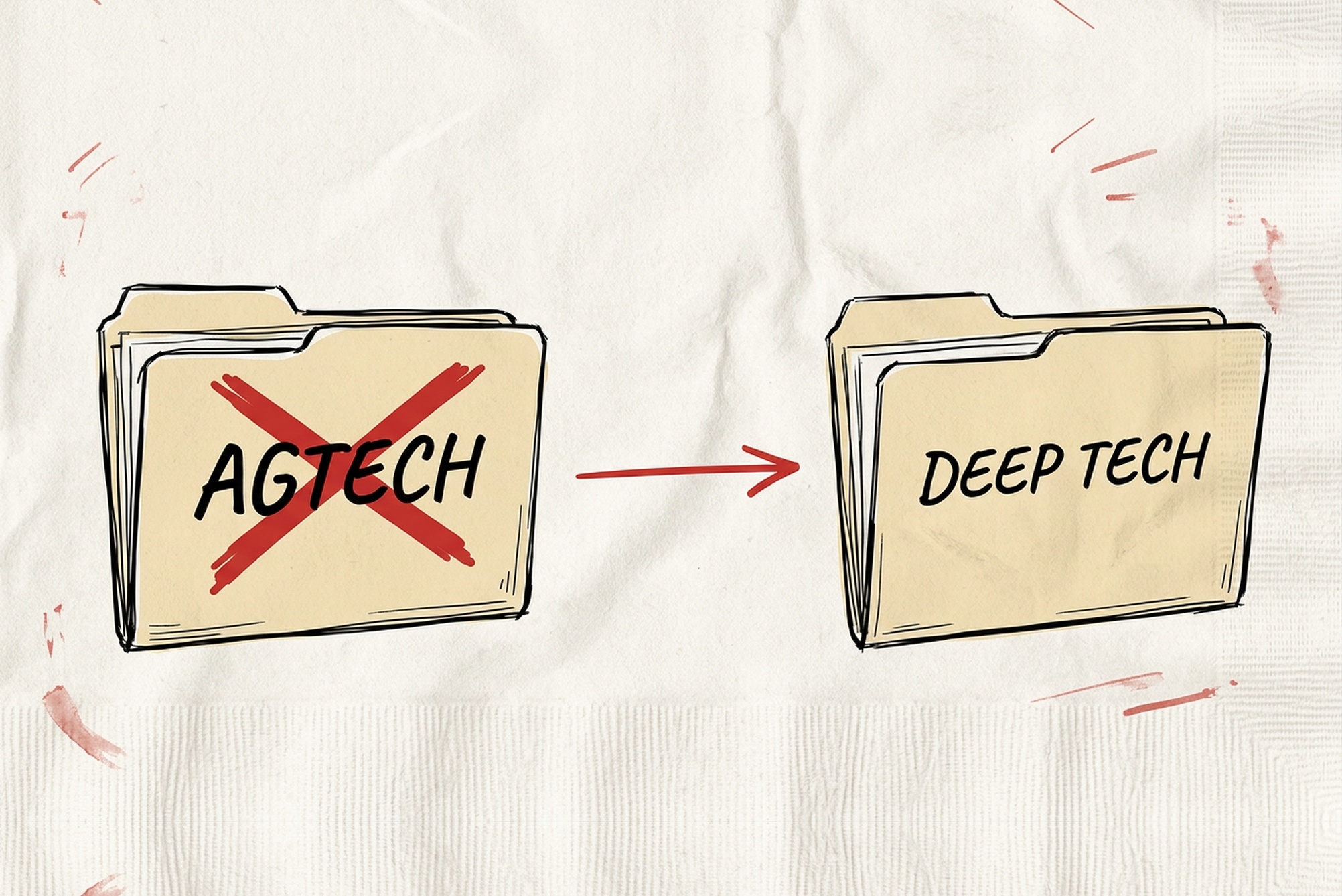
Before you even walk in the room, investors are already filing you somewhere.
Your deck, your intro email, even your tagline. Investors are already gathering evidence that forms their opinion. That’s all it takes.
VCs are pattern recognizers and the first pattern they’re looking for is the category your company fits into (fintech, consumer tech, health tech etc).
They see hundreds of companies a year, and they’re constantly sorting mentally to reduce analytical load and make their lives easier: this fits here, that fits there.
In other words, they want to put you in a box. And once they put you in that box, it’s very hard to get out. If that box is one they don’t like, you’re done – no matter how great you / your company / your idea is.
I worked with a founder who was terrified their company might be seen as AgTech. The business was great, but the category was out of fashion. That same company with the same fundamentals could get passed over for meetings on just by the label.
That’s not a fringe case. Two investors can look at the same company and make completely different decisions based solely on the category they assign it.
The box shapes everything: how they value you, what questions they ask, and ultimately whether they lean in or tune out.
Think about what this looks like in practice.
A founder building in AgTech or CleanTech right now is facing a brutal reality. They could have sound, profitable businesses, but they need the funding in order to take the next step.
Unfortunately for them, those are colder categories, and meetings dry up because the label triggers the investor’s pattern recognition before you even have a chance to say a word.
The fix: Reframe the category.
Let’s say you’re building something that uses biology as its core technology, but your margins are high, your model is asset light, and the economics look like SaaS.
Say that. Lead with it.
“We’re a high-margin, scalable tech company. Biology just happens to be our core technology.” Now, you’re having a completely different conversation than “We’re a biotech startup.”
It’s the same company but a completely different box.
But where most founders get tripped up is that you can’t just make the claim. You do have to show the work. You have to prove it. You need to show those margins, and address the capex concern before they raise it.
Get ahead of the objections. Don’t wait for them to surface.
Because once an investor files you somewhere, it’s going to be very hard to get out. Make sure the place they file you is something they associate with high return potential.
It doesn’t matter if you’re in AgTech or AI or anything in between. As a founder, you can’t afford to wait for your investors to decide what you are. They’ll default to the pattern they recognize, and that pattern can be undervalued, out of fashion or just flat-out wrong.
Decide your category, and make it clear from Slide 1. And then prove it before they have a chance to doubt it.
Getting put in the wrong box is a narrative problem. The good news: Narrative problems are fixable.
Control your own narrative before someone else does.
-Carl